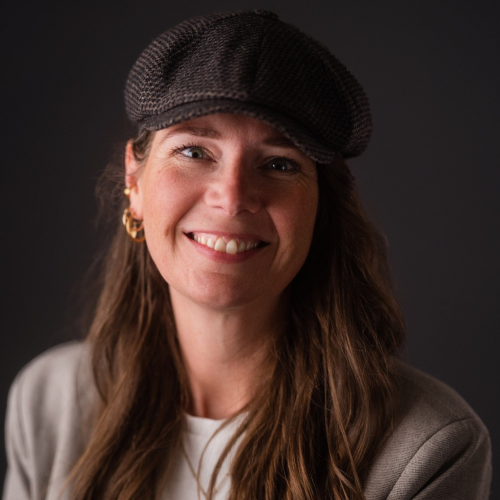

Since this autumn, I have been network incubator at Wonders of Work - a job title that would not be out of place in a list of corporate millennial hipster jobs. But what does it entail? For that, we have to go back to my Master's thesis. Namely, that one was about knowledge sharing. In a nutshell, I investigated whether scientific research groups sitting in the same corridor and eating lunch in the same canteen will work together. Spoiler: that does not happen, certainly not measurably in the form of “co-authored” research papers. To the extent that people from other research groups are having lunch at all, the conversation is about remodelling the house, the children's school or shared irritations around funding applications, while meanwhile the mailbox fills up with subject-specific e-mails from San Diego and Singapore. In other words, physical proximity is not enough to make people share knowledge.
At Wonders of Work, it is no different. Even of the people who walk around there every day, we often know little more than name and face. Not to mention the meeting groups, several of whom may be working on the same topics without being aware of it. Of course, sometimes things do happen: the crypto-trader helps the holistic coach build an investment portfolio, in exchange for a yoga session, and both have a website built by a developer they met over lunch.
But generally, people have their hands full with their own business - logical, in this economy. ‘Paying with social capital’, ‘sharing knowledge’, ‘serendipity’, all sound nice, but how do you do it? Why should you do it? And even if you do it, what does it benefit this location?
The belief of Seats2meet - the platform we were previously part of - is that you don't have to ask for it, but can trust that it will happen automatically. Asynchronous reciprocity was called that with an expensive management word: the value that is there will come back anyway.
At Wonders of Work we choose to ask about this. Precisely because we believe in the underutilised value that exists in all kinds of networks. The only question is: how do you bring that value to the surface? How do you let knowledge flow? And subsequently: how do you ensure that this value can also start to deliver something substantial for the location? For this, I like to use the metaphor of ‘incubation’ in a bio-lab. Many biological processes need specific conditions to get going: the right temperature, the right nutrient medium, a catalyst, et cetera.
Often, those conditions simulate the state in which they take place in a natural environment. This is no different for knowledge sharing. What are the natural situations where people start collaborating with each other, and hidden knowledge and skills suddenly come in handy? Is it possible to mimic such a thing, and thus drive unusual collaborations? And how do you ensure that the value created is also of some benefit to the location?
As a network incubator, this will be my job to figure out in the coming period. You could say I'm going to try to shape the philosophy of ‘paying with social capital’ in a new way, and test what works and what doesn't. For that, though, I need all of you. Because in order to get a good picture of what we can do for each other, I would like to get to know you better in the near future, starting with an open, exploratory conversation to - to use the laboratory metaphor - take a ‘sample’ of the multitude of knowledge, experience and networks you bring with you every day. You will soon read how it continues in my next article.